

Why Tier Lists Miss the Point
Every month, content creators publish agent tier lists claiming certain picks are S-tier while others are trash. Six weeks later, the list changes completely after a patch. Players follow the lists, instalock the "S-tier" agents, and wonder why their rank is not climbing.
The problem: agent effectiveness does not live in isolation. It lives in team composition. An S-tier duelist on a team with no information-gathering is a team that peeks blind. A "B-tier" sentinel anchoring a coordinated team becomes a round-winning asset. Understanding the role-based meta gives you a more durable framework than any patch-specific tier list.
The Five Roles and What They Actually Do
Duelists are entry-fraggers. Their kit is designed to take the first fight in a new space and win it. Examples: Jett, Reyna, Phoenix, Neon, Yoru. A team with no Duelist has no natural entrant — everyone defaults to utility-first, which slows tempo dramatically.
Initiators create information and set up entries. Examples: Sova, Fade, KAY/O, Breach, Gekko. A team without an Initiator plays blind — Duelists peek into unknown spaces, which is how entries die for free. Initiators are one of the highest-value roles in the meta because information wins fights.
Controllers obscure sightlines and control space with smokes and walls. Examples: Omen, Brimstone, Viper, Astra, Harbor. Smokes are essential for site executes — without them, defenders hold long sightlines and the entry becomes a free elimination. Every competitive team runs at minimum one smoke agent.
Sentinels hold territory defensively and gather passive information. Examples: Cypher, Killjoy, Sage, Deadlock, Chamber. Their gadgets (trips, turrets, walls, traps) anchor a site, provide flank information, and force enemies to spend abilities clearing them. Post-plant sentinel setups are often the deciding factor in close eco rounds.
Flex agents have hybrid capabilities — Skye (Initiator/healer), Clove (Controller with Duelist traits), Breach (Initiator with heavy team utility). They adapt to multiple roles depending on composition.
The Minimum Viable Composition
Most competitive teams run:
- 1 Duelist (entry)
- 1-2 Initiators (information, setup)
- 1 Controller (smokes)
- 1 Sentinel (anchoring)
This is a principle, not a rule. Teams deviate based on map (double Controller on Breeze/Icebox), playstyle (double Duelist for aggressive tempo), or specific synergies (Breach + Jett, Fade + Raze). But if your team is missing a smoke or has no information tools, the deviation should be intentional.
Map-Specific Meta Considerations
Bind: Tight corridors and teleporters reward aggressive utility. Raze's Boom Bot provides information in tight spaces that would otherwise cost a dangerous peek. Viper's wall blocks crucial sightlines across teleporter entrances.
Haven: Three sites demand wide information coverage. Double Initiator comps (e.g., Sova + Fade) are viable because you need information on three defensive setups simultaneously.
Icebox: Verticality (rafters, pipes, elevated positions) favors Sentinels with vertical utility. Killjoy Turrets on elevated platforms provide information that is difficult to remove without heavy resources.
Ascent: Mid control is the game-within-the-game. Controller smokes on Mid Catwalk and Market gate are essential every round.
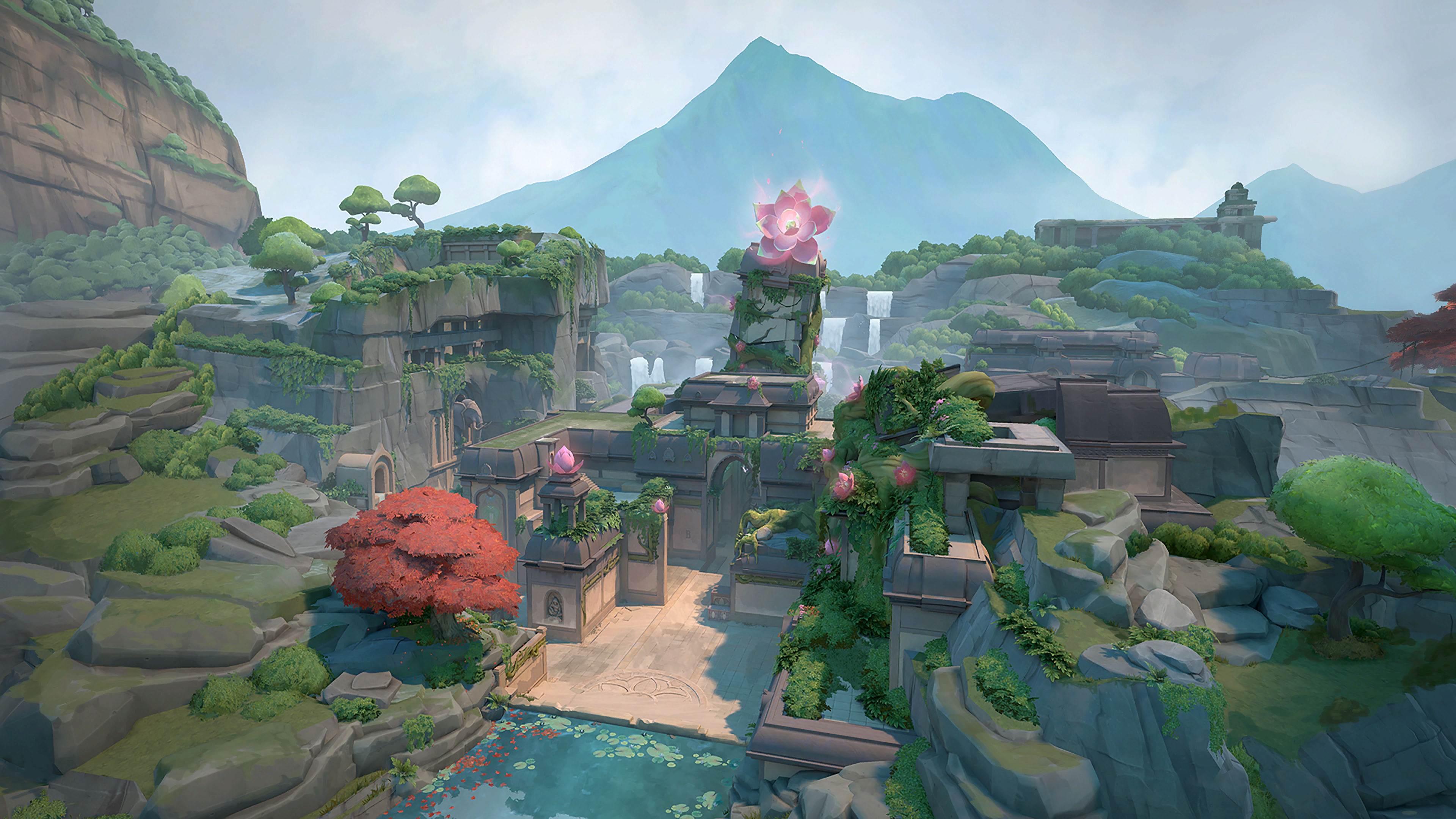
Lotus: The rotating door mechanic and three-site structure reward Initiators with flanking tools and Sentinels that shut down the rotation corridors with trips and alarms.
How to Read a Meta Shift
When patches drop, ask: does this make the role stronger or weaker, not just the specific agent?
- A Sova nerf makes information-gathering Initiators less reliable → Fade or KAY/O fill the same role
- A Killjoy nerf reduces Turret range → anchoring Sentinels are weaker → teams push more aggressively → mobility Duelists gain value
Role meta shifts more slowly than agent-specific meta. Understanding roles means you adapt faster than players chasing individual tier lists.
Practical Takeaway
When selecting an agent, ask:
- Does my team have a smoke? If not, consider Controller.
- Does my team have information? If not, consider Initiator.
- Does my team have an entry fragger? If not, consider Duelist.
If all three are covered, play your best agent. Mechanical proficiency on a "B-tier" agent outperforms mechanical mediocrity on an "S-tier" one.
The strongest meta advice: master one agent per role, not many agents at surface level. Role knowledge transfers. Agent knowledge compounds.
Put This Into Practice
Get coaching tailored to your gameplay
Review a match with free AI coaching, then auto-record on desktop when you are ready.
Share this article