
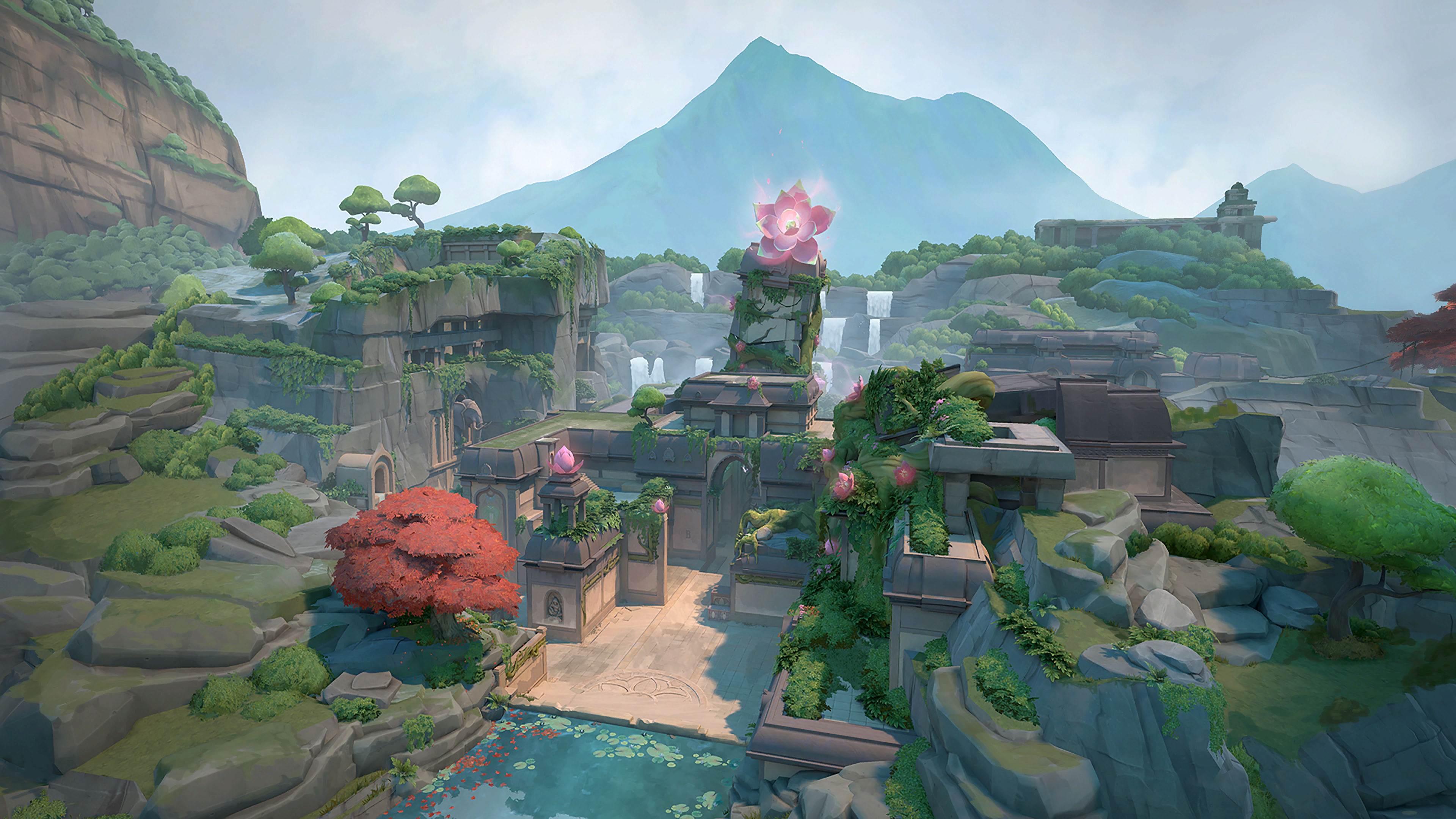

Split Map Guide Valorant: Callouts, Strategy and Best Agents
Split is one of the most defender-favoured maps in Valorant because almost every important entrance is tight, layered and easy to stall. If attackers do not take mid with intent, they usually run into stacked utility at A Main or B Main and wonder why every execute feels impossible.
The map's identity comes from verticality and rotation pressure. Mid Top, Mail and Ropes connect the whole map, so whoever controls those spaces gets to decide whether Split feels closed and claustrophobic or open and playable.
## Map layout at a glance
| Sites | Key Areas | Attacker advantages | Defender advantages |
|---|---|---|---|
| A | A Main, A Ramps, Screens, Heaven, A Site | Can split through Main and Ramps, pinch Heaven and punish defenders anchored behind Screens | Heaven and Screens create layered crossfires, and narrow chokes make stall utility extremely efficient |
| B | B Main, B Garage, B Heaven, Back Site, Pillar | Can explode through Main or split from mid into Heaven and ropes, forcing anchors to watch multiple heights | Sentinels and controllers thrive with deep utility, strong spam angles and easy support from Heaven and Mail |
## Attacker strategies
Split rewards attackers who treat mid as the engine of the round rather than an optional lane. Even if you do not end mid, forcing defenders to spend utility in Top Mid, Mail or Ropes makes both sites easier later. The biggest attacking mistake on Split is telegraphing a five-man site hit with no map pressure. Defenders can read it early, keep all their smokes for the choke and fight you on their terms.
Instead, default with purpose. Contest A Main, show presence B Main, and use utility to own Mid Top before committing. When defenders feel uncertain about Mail, Heaven and Ropes, their site players become much easier to isolate.
### Taking A Site
A hits become dangerous when Main and Ramps are timed together. If attackers walk only through A Main, Heaven and Screens can lock them in the choke with one smoke and one flash. But if a second wave arrives through Ramps, defenders in Heaven cannot hold both angles comfortably and the A player on site loses support. Smokes should usually cut Heaven and Screens, while your entry utility checks close corners around site boxes.
If you have mid control first, A is often less about raw speed and more about forcing defenders to make a bad choice. Pressure Mail and Ropes, then either split Heaven or instantly regroup into A Main before the defenders reposition. The goal is not just to enter site; it is to make the Heaven player feel late, blind or trapped.
Taking B Site
B can look simple, but it is usually the harder direct hit because the choke is narrow and defender utility is brutal. The cleanest B rounds either split from Mid into Heaven or force the B anchor to spend utility early with patient B Main pressure. Once Heaven is threatened, pillar and back-site defenders lose their best support and the site becomes much more plantable.
Ropes control matters here because it affects how quickly attackers can convert mid presence into B pressure. If your team wins Mail and threatens Heaven while B Main is ready to swing, the anchor often has to give space. If you rush B Main with no mid pressure, you are asking one smoke, one molly and one spam angle to end the round.
### Attacking the full round well
A strong Split attack usually follows a simple sequence: take some mid space, identify where the sentinel and controller utility are stacked, then hit the weaker side with a split or late regroup. You do not need to force every round through Mail, but you do need to make the defenders think you might. Keep lurks disciplined because defenders rotate fast through ropes and vents. When spike goes down, prioritise post-plant positions that control Heaven and Screens rather than stacking site boxes and hoping to win the retake duel.
## Defender strategies
Split defence is strongest when each player understands which lane they are responsible for delaying and which lane the team as a whole must never concede for free. Mid is the obvious example. If defenders gift Mid Top, Mail and Ropes without a fight, both sites become fragile.
At the same time, defenders should not confuse early aggression with good defence. The best teams on Split contest space with purpose, often using a sentinel or controller to hold a lane while the rest of the team stays ready to collapse once attackers reveal their real plan.
### Holding A Site
A defence revolves around protecting Heaven and making A Main expensive. One player tucked site with support from Heaven or Screens can survive for a long time if utility lands early enough in the choke. Ramps control is also valuable because it denies the easiest split and gives advance warning if attackers have invested in mid.
If attackers pressure both Main and Ramps, do not let your Heaven player get isolated. Screens can support, but only if the team recognises the split early. Sometimes the correct answer is to concede site boxes, preserve lives and retake with Heaven, Screens and flank pressure. Split punishes defenders who die heroically in front of an inevitable trade chain.
Holding B Site
B is where strong sentinels win games on Split. Killjoy and Cypher are excellent because they hold B Main, protect Heaven and free teammates to help mid without fully giving up site. The B anchor should know whether the plan is to contest the choke, play anti-rush or survive for a Heaven retake, because indecision usually leads to getting pinched between B Main and a mid split.
Ropes and Heaven control are critical when attackers convert mid. If your Mail player loses ground with no trade plan, B Site suddenly has to watch two directions and usually folds. Rotate quickly, but not blindly. A single player who survives in Heaven or back site often buys enough time for the full retake to become favourable.
### Rotations and retakes
Rotations on Split are short, but the map is so segmented that arriving half a second late can still mean losing the site. Defenders should communicate what they are hearing in terms of map control, not just footsteps. Saying 'they have Mail' is much more useful than 'I hear one'. Retakes are strongest when Heaven and flank timings are synchronised. If one player drops early while another is still trapped in Screens or Mail, attackers get isolated fights instead of a real collapse.
## Mid control and rotations
Mid is the centre of Split strategy. Mid Top leads into Vent, Mail and Ropes, and those positions directly affect both bomb sites. Attackers who consistently win even a slice of mid force defenders to spend utility away from the site choke points, which is exactly what makes Split playable. Defenders, meanwhile, should fight for enough mid information to know whether a split is possible. Brimstone is especially valuable because his smokes can deny Mail and site sightlines quickly, while sentinels on B can keep the rest of the map stable. If your team ignores mid, you are not really playing Split; you are gambling.
## Best agents for Split
- Brimstone: He can rapidly smoke Mid, Heaven and Screens in the same round, which is perfect for Split's multi-layered executes and retakes.
- Killjoy: Her utility is exceptional on B site and Heaven, letting defenders lock one side of the map while still helping mid or rotating on contact.
- Cypher: He punishes predictable site hits, protects flanks and gives defenders the information they need before committing to a rotation.
- Raze: Satchels, nade and Boom Bot are ideal for clearing the map's tight corridors and punishing defenders sitting in known choke positions.
- Omen: He is excellent for one-ways, aggressive mid contests and flexible site support, especially if your team wants more proactive mid fighting.
## Key callouts
- A Main: The main attacking route into A and the first place defenders try to tax utility.
- Ramps: The elevated lane connecting mid-side pressure into A Heaven control.
- Screens: The defensive pocket behind A Site that supports Heaven and anchors retakes.
- Mid Top: The attacker-favoured entrance to mid and the start of most good Split defaults.
- Mail: The connector from mid toward B Heaven; control here changes the whole map.
- Ropes: The fast vertical rotation route that both attackers and defenders fight over when B pressure develops.
- B Main: The narrow B choke where defender utility often decides the round before site is reached.
- B Heaven: The high-ground position that makes B so hard to hit without mid pressure.
## Common mistakes on Split
1. Skipping mid every round: If attackers never threaten mid, defenders are free to stack site utility exactly where they want and make every execute feel impossible.
- Taking ropes without a plan: Ropes is powerful only if it connects to a split, rotate or timing. Owning it for two seconds and then abandoning it changes nothing.
- Dry exploding through B Main: B Main is built to punish impatient entries. Without pressure on Heaven or layered utility, the choke becomes a shooting gallery.
- Over-fighting as a defender: Split defence is about efficient delay and crossfires, not five isolated hero peeks. Surviving is often more valuable than an early duel.
- Bad post-plant spacing: Stacking together on site boxes gives defenders easy trade paths from Heaven, Screens and flank. Spread out and control the retake lanes instead.
## Related guides
Want to climb faster? UpForge analyses your Valorant gameplay with AI and gives you personalised coaching. Try UpForge free at upforge.gg — no credit card required.
Put This Into Practice
Get coaching tailored to your gameplay
Review a match with free AI coaching, then auto-record on desktop when you are ready.
Share this article