
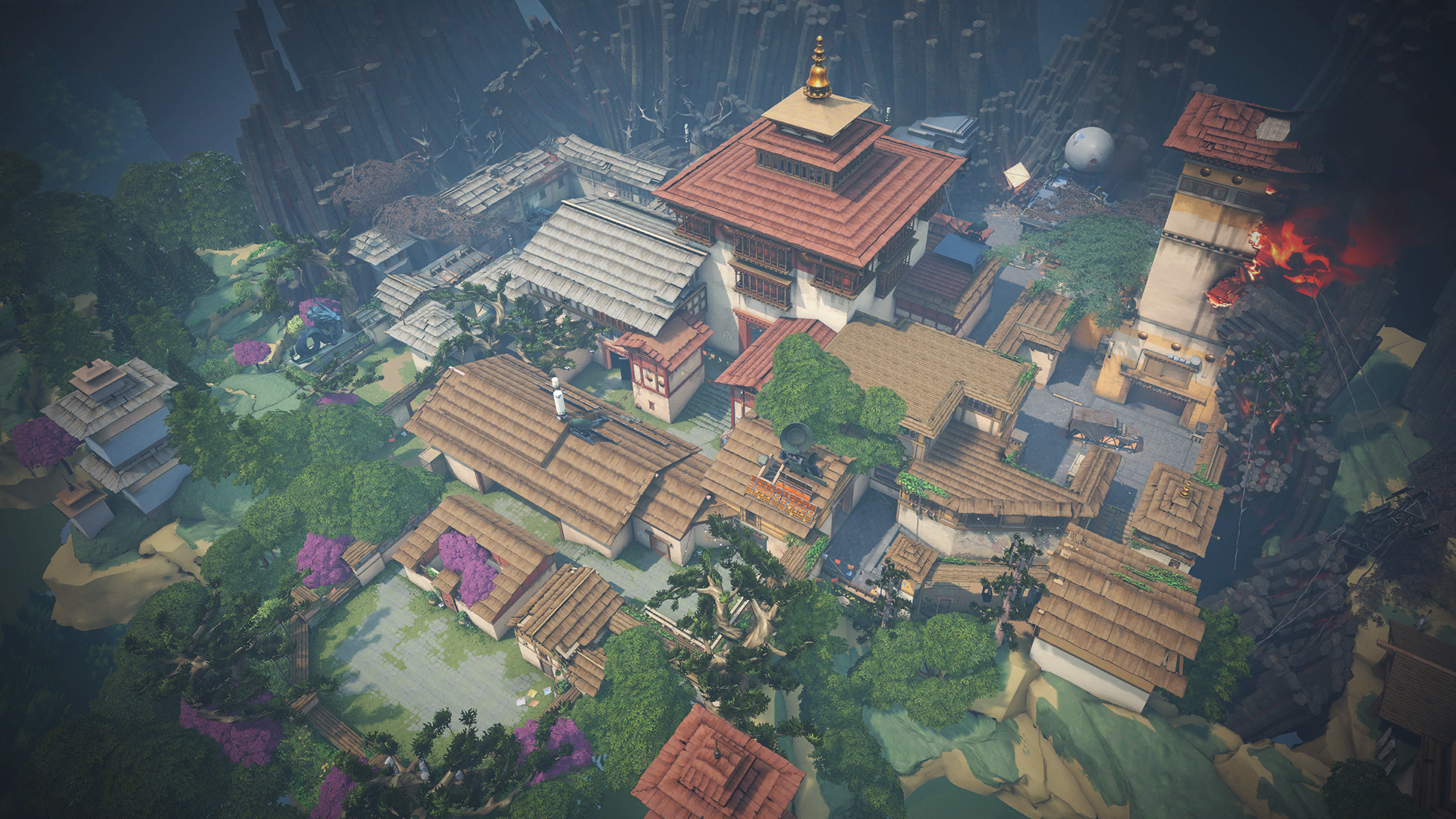

Lotus Map Guide Valorant: Callouts, Strategy and Best Agents
Lotus is a three-site map set in India, and its rotating doors between A-B and B-C make information and timing more complicated than on almost any other map. Opening a door creates a loud sound cue, which means rotations are powerful but rarely subtle.
Because attackers can threaten three sites and defenders have to split early resources across a huge layout, Lotus heavily rewards good initiator play and clear utility planning. It is a map where lazy defaults fall apart fast, but well-timed splits can make the defence look completely lost.
## Map layout at a glance
| Sites | Key Areas | Attacker advantages | Defender advantages |
|---|---|---|---|
| A | A Lobby, A Main, A Root, Tree, A Site, Drop | Can split through Main and Tree, abuse door timings and punish defenders stretched by three-site pressure | Tree and close site positions let defenders delay long enough for fast support from B if rotations are called early |
| B | B Main, B Stairs, B Site, Pillar, Doors | Fast to hit from Main and easy to pressure as a pivot point when defenders over-rotate | Central location allows quick reinforcements, but anchors must survive utility-heavy collapses |
| C | C Main, Mound, C Site, Waterfall, Hall | Long lane lets attackers stage utility well and split with late door or mound pressure | Strong stall from site and waterfall angles if defenders preserve utility and call rotations early |
## Attacker strategies
Lotus attack is about presenting too many credible threats for the defence to read cleanly. With three sites, the worst thing attackers can do is reveal commitment too early and let defenders stack the correct area. The best Lotus teams default across A Lobby, B Main and C Main, gather information with initiator utility and then collapse where the defence looks thinnest.
The rotating doors are not just gimmicks. They are timing tools. A door sound can sell a fake, speed up a split or force defenders to hesitate for a second, and on Lotus that second often decides the entire round. Remember the 12.05 update notes too: the attacker lobby wall was thickened and the Vines jump changed, so some older pathing habits are less reliable than they used to be.
### Taking A Site
A takes are strongest when Tree pressure exists. If attackers only run through A Main, defenders in Tree and close site can layer utility and stall until help arrives. But when Tree is threatened, the A defenders must split their attention and often give ground earlier than they want. Flashing or dogging into Root, then timing the Main swing with Tree pressure, is one of the cleanest ways to crack the site.
Attackers should also respect the post-plant structure here. A plant that gives Tree or Drop away for free is much less stable than it looks. If the defence is over-investing C, A can be a great punish, but only if the hit secures the side lanes that make the retake dangerous.
Taking B Site
B is the smallest site on Lotus and often the fastest to reach, which makes it tempting in ranked. The trap is thinking fast automatically means easy. Because the site is central, defenders collapse quickly if the execute is late or sloppy. To hit B well, attackers need explosive utility, immediate trading and a clear plan for whether they are planting safe and holding from Main or using B as a pressure point before pivoting again.
B is also the best site for punishing over-rotations. If defenders pull too many players toward A or C on early information, a sudden B hit can land before the door timing lets them recover. Just make sure the team commits together, because isolated entries into Pillar or Stairs die very quickly.
Taking C Site
C offers a long runway for utility and that makes it ideal for initiator-heavy teams. Use Mound control to threaten the side, clear the close corners in C Main and deny the waterfall or site defender the comfort of repeated jiggles. Once the first layer is forced back, the site opens nicely, but only if attackers keep moving. Stopping in the choke gives defenders time to recycle utility and call the B-to-C rotate.
The best C rounds often include delayed pressure through door or a lurk that punishes the defender trying to retake Hall control. Planting is not enough here. You need a plan for waterfall, hall and main spacing so the retake never becomes a simple straight-line flood.
### Attacking the full round well
Across full rounds, Lotus rewards flexibility. Start wide, identify where the enemy initiator and controller utility are being spent, then decide whether to lean into the weak site or use the sound of a rotating door to freeze the defence before changing direction. Because there are three sites, economy matters too: if the defenders have limited stall left, a decisive hit is better than over-cooking the default. If they still have full utility, keep stretching them until one anchor is isolated.
## Defender strategies
Defending Lotus is difficult because you cannot hard-commit everywhere at once. The goal is not to own every lane; it is to make sure no lane is lost for free. Initiator utility is especially valuable because it lets defenders verify pressure before rotating, which is critical on a map where a wrong gamble leaves an entire site exposed.
The rotating doors help defenders too, but only if they are used with intention. Slamming a door without a timing plan often just announces your position. Good defenders use doors to shorten reinforcement paths, create sound traps and re-establish shape after the attackers show their hand.
### Holding A Site
A defence is built around surviving the first contact from Main while tracking whether Tree is threatened. If Tree is secure, the site feels stable. If Tree is lost, A becomes much harder to hold because defenders are suddenly split across two fronts. The anchor should know whether help is coming from B and whether the plan is to fight close or fall to a retake setup.
Do not overpeek A Lobby just because the lane is quiet early. Lotus attackers love punishing isolated info plays. Usually it is better to hold a useful angle, use utility to confirm numbers and keep your life for the retake if the full split arrives.
Holding B Site
B defenders need calm more than heroics. Because B is central, players often panic and over-swing at the first sign of contact. The better approach is to use stall utility, call for support immediately and keep the attackers from claiming plant space uncontested. If B holds for even a few extra seconds, the reinforcement paths from both sides make the retake much stronger.
Against fast teams, anti-rush setups are excellent. Against patient teams, save enough utility for the actual hit instead of dumping it on first noise. B rounds are rarely decided by one perfect peek; they are decided by whether the defence buys enough time for the map to collapse inward.
Holding C Site
C defence depends on managing the long lane without getting trapped by it. Contesting Mound early can be valuable, but only if there is support or a clean exit. Otherwise, play the site with waterfall and hall in mind and make the attackers clear every pocket. The C anchor's job is not to win instantly; it is to stop the attackers from getting a free plant and a free post-plant setup at the same time.
When the hit comes, communicate whether door pressure is part of it. Many failed C defences happen because one player thinks the round is still a straight C Main hit while another is already getting pinched from B-side movement.
### Rotations and retakes
Rotations on Lotus are loud and layered. The doors speed things up, but the sound cue means attackers know something changed. That is why defenders should rotate off real information such as utility, spike sighting or confirmed numbers, not just a single footstep. Retakes are often strongest when one player comes late through the quieter lane while the rest pressure the obvious entrance. If everyone uses the same route, attackers get the easiest holds in the world.
## Mid control and rotations
Lotus does not have a classic single mid like Split or Pearl, but Top Mid and the spaces around B influence the whole map. B Main, Stairs and the doors are the central gears that connect all three sites. Attackers who can keep defenders uncertain around those gears make every rotation worse. Defenders who read door timings and initiator information well can turn the map's complexity into an advantage. On Lotus, map control is less about owning one lane forever and more about understanding how quickly a lane can convert into pressure on another site.
## Best agents for Lotus
- Fade: Her scouting utility is perfect for a three-site map where information wins rounds and close corners are everywhere.
- Skye: She helps teams clear space, set the tempo for fast site hits and stabilise retakes with flexible flashes.
- Omen: His smokes and mobility are excellent for split hits, reactive support and punishing defenders who are stretched thin.
- Raze: She clears tight Lotus pockets well and adds explosive entry power on B or C where pace can overwhelm anchors.
- Killjoy: Even on a wide map, she gives structure by locking a flank or anchoring a site long enough for the rotating defence to matter.
## Key callouts
- A Lobby: The staging area for A pressure and one of the main early-info battlegrounds.
- Tree: The side lane into A that makes site splits much harder to defend.
- B Main: The direct lane into the central site and a common pivot point in fake-heavy rounds.
- B Stairs: The elevated access near B that shapes both entries and retakes.
- C Main: The long approach toward C where initiator utility often decides whether the hit gets moving.
- Mound: The side space near C that adds pressure and makes long-lane hits far harder to read.
- Rotating Door: A noisy but powerful connector between map sections that changes timing every time it moves.
- Top Mid: The central linking space that influences how quickly pressure can shift between sites.
## Common mistakes on Lotus
1. Revealing the hit too early: Three-site maps punish predictable attacks. If defenders know the destination early, they can stack the exact utility you were trying to avoid.
- Using doors as a gimmick only: Doors are strongest when they support a timing, fake or rotation. Randomly opening them often just gives defenders free information.
- Ignoring side lanes after plant: On Lotus, post-plants fall apart when attackers win site but forget Tree, Hall, Mound or door timings.
- Defending every lane with ego: Defenders do not need to hard-clear every entrance. They need useful information and enough lives left to retake together.
- Not adapting to the 12.05 geometry changes: Small map updates matter. Old pathing or jump assumptions around attacker lobby walls and Vines can create unnecessary mistakes.
## Related guides
Want to climb faster? UpForge analyses your Valorant gameplay with AI and gives you personalised coaching. Try UpForge free at upforge.gg — no credit card required.
Put This Into Practice
Get coaching tailored to your gameplay
Review a match with free AI coaching, then auto-record on desktop when you are ready.
Share this article